
“EXOTIC FOODS IN THE PHILIPPINES”
This blog will show you the most extraordinary food in the country of the Philippines that are unusual to our taste buds.
— David Isles and Frederick Salcedo.
Philippine cuisine, though not quite popular in other parts of the world, mostly comprises of delicious and colorful fare made with fish, meat, and vegetables. However, there are multiple number of dishes whose ingredients are unexpected and might be downright bizarre to those who will see it for the first time. One way to fuel up your next trip’s adventure factor is to try things that are unfamiliar to you, including new foods. Dare yourself to seek out and taste some of the curious fare listed below:
1.) Adobong kamaru – Pampanga
Kamaru, or mole crickets, which are plentiful in Pampanga, are considered a Kapampangan delicacy. It is often made into adobo, but can also be served deep fried. Several restaurants in Pampanga serve this dish, including Everybody’s Café in San Fernando.

2.) Adobong salagubang – Nueva Ecija
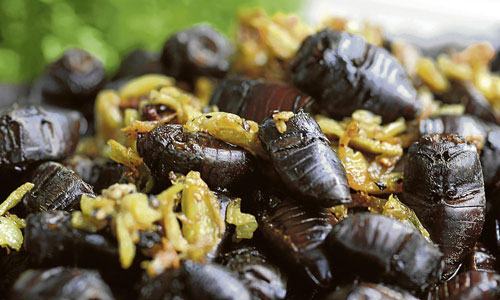
The salagubang, or june bug, is a common treat in Nueva Ecija, where many of these beetles thrive. When fried, it can be served as an appetizer or as pulutan (food served with alcoholic drinks, usually beer). Sometimes, it is prepared like adobo and eaten with rice. Salagubang can be found in some markets in Nueva Ecija.
3.) Tuslob-buwa – Cebu
“Tuslob” means”dip” and “Buwa” means “bubbles” in Cebuano, the language spoken in the Visayas region of the Philippines. This Cebuano food is made from pig’s brain, pork liver or intestines (optional), onions, oil, soy sauce, fish sauce and other various seasonings. “Tuslob Buwa” is basically a local dip made of the mentioned elements. Often balls of sticky rice are dipped in this dish. This one actually isn’t as bad as it sounds. Brains sort of have the texture of scrambled eggs

4.) Adobong uok – Rizal
Beetle larvae may not sound very appetizing at first, but uok cooked as adobo served with rice and tomatoes is considered an exotic delicacy. One restaurant that serves this dish is Balaw-Balaw Restaurant in Angono, Rizal.
5.) Tamilok – Palawan
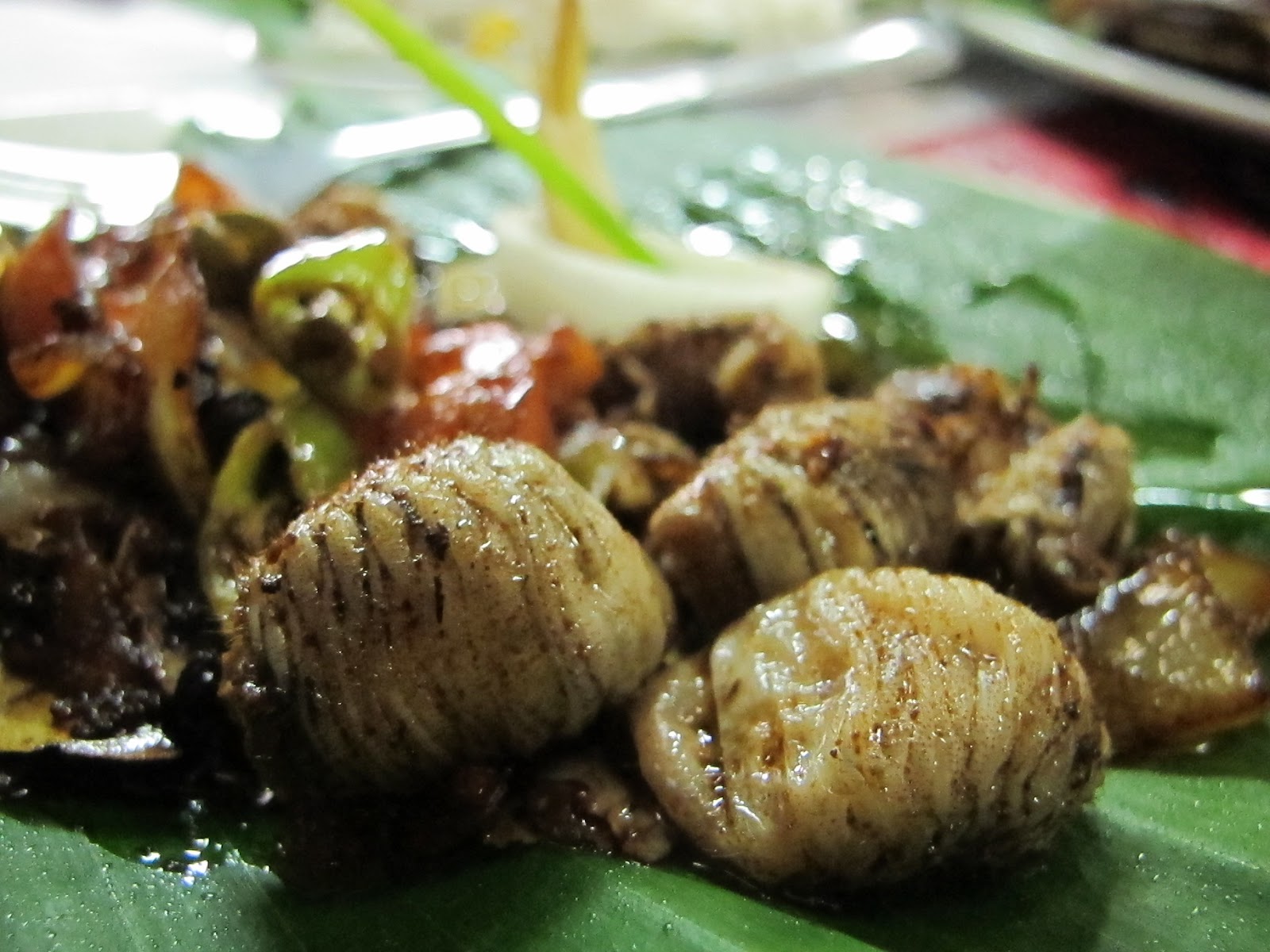
The tamilok is a wood worm which tastes like your familiar oyster. Its a famous delicacy found on the beautiful island of Palawan. Although it looks like a worm, it is actually a mollusk found inside rotting mangroves. Although they look horrid they aren’t that bad, and when you think about it, oysters are just as disgusting to look at.

6.) Abuos – Ilocos
Also known as ant-egg caviar, this Ilocano delicacy is one that is tasty, but a little bit pricey. Abuos, which looks like legumes, is often served sautéed in garlic or prepared as adobo, though some eat it raw. These are sold at public markets in Ilocos, and are usually displayed on leaves.

Though considered common eats among many Filipinos, there are still those who have yet to pluck up the courage to try balut. Balut is a fertilized duck egg, either 16 or 18 days old, which has been boiled and is eaten with salt or vinegar. Though the almost-fully-formed duckling inside the egg can be off-putting to some, balut is a tasty afternoon treat all over the Philippines.
7.) Balut – All over the Philippines

8.) Betute tugak (stuffed frogs) – Pampanga
Though frogs’ legs are considered a delicacy in other parts of the world, frog dishes are made slightly differently in the Philippines. The most common way of preparing frog is to fry it (prito), or to turn it into adobo (a kind of stew where the meat is cooked in garlic, oil, vinegar, and laurel leaves). However, in Pampanga, there is a dish called betute tugak, which are deep-fried field frogs stuffed with minced pork.

9.) Etag – Cordillera Region
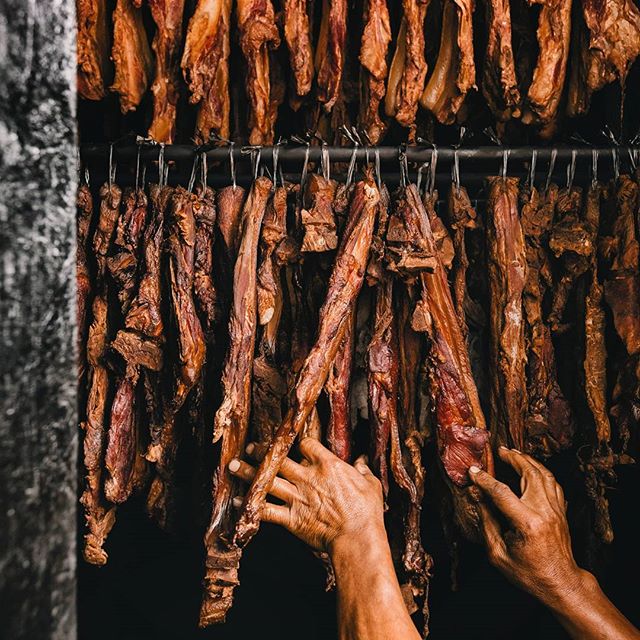
Etag is salted pork that is kept underground in earthenware jars to age. It is not a dish in itself, as it is most often used as an ingredient in other viands, but it adds a very distinct flavor to meat or vegetable dishes.
10.) Adidas – All over the Philippines
Like most Asians, Filipinos love to eat chicken feet, which they call “adidas”, named after the shoes. Most of the edible meat on the feet consists of skin, tendons and muscle, and the texture is very gelatinous. This gives adidas a distinct texture different from the rest of the chicken’s meat. They aren’t easy to eat, many small bones which you have to spit out as you go. Nevertheless, they are loved here in the Philippines, as they are in China and most other Asian countries.

11.) Pinikpikan – Cordillera Region
Though similar to the traditional tinolang manok (chicken in broth with vegetables), pinikpikan is a chicken dish where the process of preparing the chicken is considered a tribal ritual which helps the people determine their tribe’s fate regarding a particular course of action. The dish derives its name from the word “pikpik,” which means to beat lightly, usually with a stick. To prepare pinikpikan, a live chicken is beaten lightly with a stick under the wings and neck until these areas become dark blue-this is so that the blood of the chicken coagulates, making the meat more flavorful but keeping the chicken’s bones unbroken. The chicken is then killed with one hard blow to the head, and cut up. Before the meat is cooked, the tribal priest reads the liver and bile to see if they will have good luck. After this, the edible parts of the chicken are boiled in water flavored with etag. Some restaurants in Baguio City still serve pinikpikan.

12.) Soup No. 5 – Manila and Cebu
This story behind this soup is as mysterious as its name. Soup No. 5 looks like a regular meat soup, but it is actually made of bull or ox penis and testicles, and is believed to be an aphrodisiac. Some restaurants in Binondo serve this dish, and it can also be found in Cebu, where it is known as Lanciao.

_______________________
Conclusion
So based on the dishes above, basically, we can say that many Filipinos are very frugal people who have learned to make the best dishes they can out of locally available ingredients. Possessing this trait especially with food is just like being frugal with anything else, the more parts you can use, the less expensive day to day life becomes. And this is just one of the best characteristics Filipinos have.
“In my food world, there is no fear or guilt, only joy and balance.”
Ellie Krieger
 B-I-Z-A-R-R-E
Thanks for that wonderful food ideas!great blog
LikeLike
I’m a local but I didn’t knew most of those foods exist. I suddenly want to try all of themm ;(((
LikeLike
Great! I get to know other dishes that are not so familiar to me. Thanks!
LikeLike
Wow
LikeLike